Showing posts with label art. Show all posts

Saturday, 13 January 2018

Monday, 25 December 2017

My Christmas cherub

This cherub from Austria is one of my favourites, particularly for Christmas: 


Thursday, 13 April 2017

Italian land artists Meneguzzi and Sponga in the Sofiero castle park

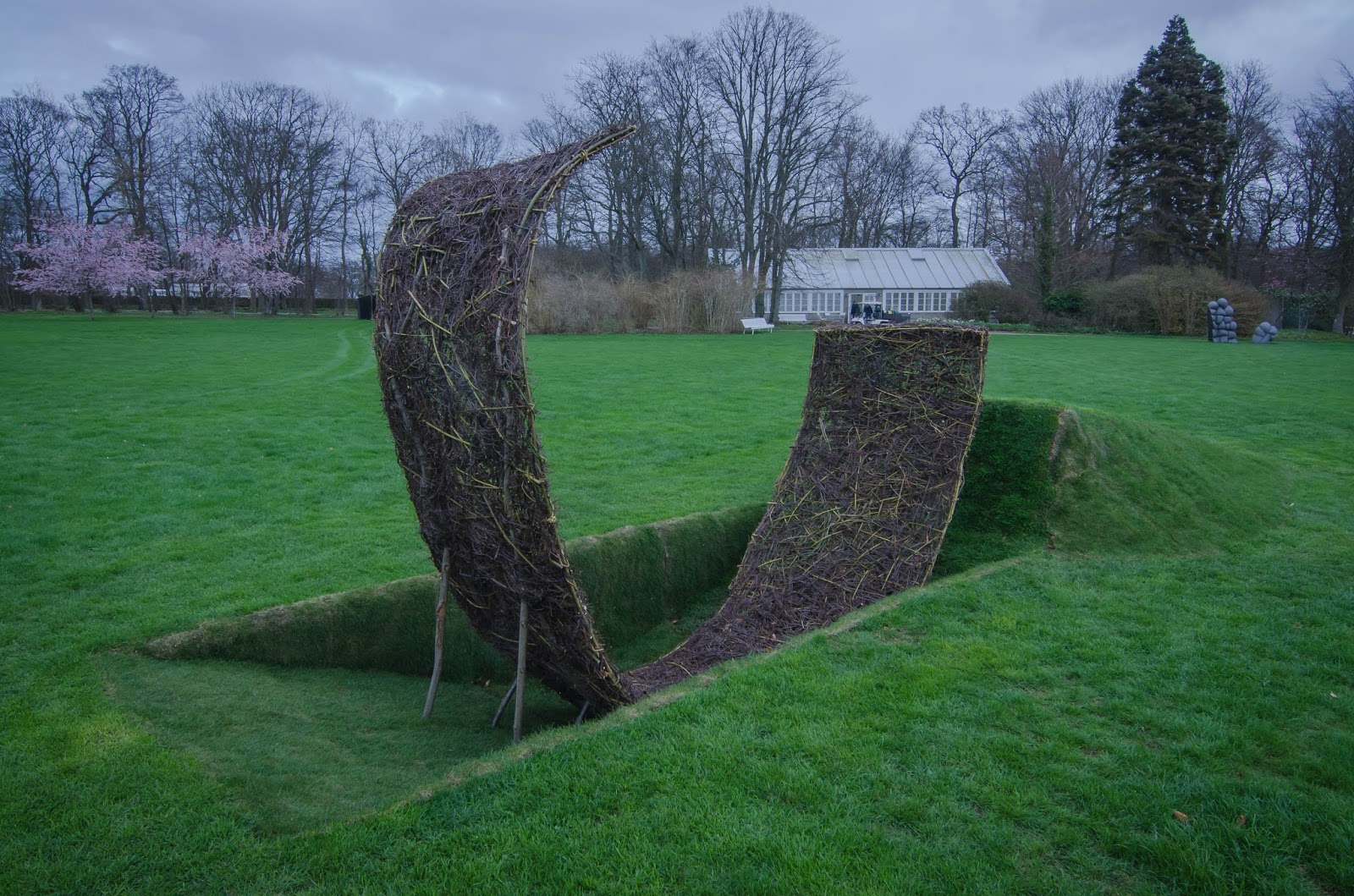
Italian land artists Gabriele Meneguzzi and Vinzenzo Sponga have created an installation for the summer season 2017 in the Sofiero castle park in Helsingborg

Land artists Gabriele Meneguzzi and Vinzenzo Sponga in the
Sofiero castle park. 

Installation by Meneguzzi and Sponga.
More information about the artists here:
http://www.vivoverde.com/en/


Saturday, 9 April 2016

Tuesday, 19 January 2016

A Maritime Drawing

Today I photographed and coloured a wonderful drawing from the book "Svensk sjöfart" (Swedish shipping), published in 1921. The drawing was made by artist and architect Eduard Heurlin, who died in 1947.


Saturday, 1 February 2014

A sign of spring in Landskrona

This morning I found another sign of spring at the roundabout, close to the Landskrona train station:

I do not know what this sculpture is officially called, but for me it is a giant steel tulip - another sign of spring!
PS
The "medieval" tower in the background must be an old water tower - quite interesting architecture from the 19th century, I would think.

Saturday, 14 December 2013

First of May in Vienna in the late 19th century

First of May in Vienna
 
Early 1890s woodcut by Rousseau after a watercolour by Myrbach
 

Sunday, 1 December 2013

First Sunday of Advent drawings by Albert Edelfelt

In 1897 the Swedish magazine Ord och Bild published these Advent drawings by the Finnish artist Albert Edelfelt:


Wednesday, 27 November 2013

The Great Buddha of Kamakura photographed in the 1890s


The Great Buddha is a monumental outdoor bronze statue in the city of Kamakura in Kanagawa PrefectureJapan. The 13.35 m high (incl. platform) statue, which dates from 1252, is one of the most famous icons of Japan.


The Great Buddha of Kamakura, photographed in the 1890s.

It appears that the western tourists posing in this 1890s picture of the Great Buddha, did not fully respect the text at the entrance to the grounds (or perhaps it was not there at the time?):

"Stranger, whosoever thou art and whatsoever be thy creed, when thou enterest this sanctuary remember thou treadest upon ground hallowed by the worship of ages. This is the Temple of Bhudda (sic) and the gate of the eternal, and should therefore be entered with reverence"

The grandeur of the statue inspired Rudyard Kipling to write the poem "The Buddha of Kamakura", which includes the following lines:

"And whoso will, from Pride released,
Contemning neither creed nor priest,
May feel the Soul of all the East
About him at Kamakura."

The Indian spiritual teacher Sri Chinmoy has given this description of the temple and statue in Kamakura:

"For me, it is one of the most peaceful places on earth. There are thousands of statues of Lord Buddha in existence, but the large statue at Kamakura embodies boundless peace. When you go there, no matter how restless you are, no matter how much your mind has been bothering you the whole day, no matter how involved you are in the hustle and bustle of life, as soon as you stand before the statue, all your inner turmoil is washed away. The statue embodies the most powerful peace you can ever imagine or feel."


A recent picture of the Great Buddha:

(image by Wikipedia)

Friday, 8 November 2013

Medieval and modern in Helsingborg's Church of St. Mary

Visiting medieval cathedrals and churches is always fascinating. On every visit you discover something new or unexpected.

Like today, when I spent some time in the medieval Church of St. Mary in Helsingborg - the church where the great Buxtehude learned to play the organ - I noticed how well the beautiful modern mosaic windows go together with medieval art objects:

Detail of the 15th century altarpiece.


Monday, 21 October 2013

A statue of a Swedish king in Karlskrona

When I saw the statue of the founder of the Naval City of Karlskrona, king Charles XI (Karl XI), during my visit in August, my first thought was that some important renovation work was being done.


However, soon I learned that I actually saw a work of art surrounding the king. It was the Swedish artist and landscape architect Monika Gora's piece "See what the king sees".

Later I noticed that she has made similar "installations" in e.g. Malmö and Helsingborg.

Sweden is full of old cities and towns, with statues of royals and other dignitaries. Which means that there is work to do for Gora and other contemporary artists ...

I for my part prefer to look at Charles XI and the rest from the street level:

Charles XI in Karlskrona
(image by Wikipedia)
 

Saturday, 11 May 2013

The Fürstenberg art collection in Gothenburg

The first room in the Fürstenberg Gallery contains this large painting, "Scandinavian Artists' Lunch at Café Ledoyen" by Hugo Birger (1886)

The Gothenburg Museum of Art's  Fürstenberg Gallery contains an oustanding collection of Nordic art from the decades around the turn of the century. The collection was in 1902 donated to the city of Gothenburg by  the businessman and patron Pontus Fürstenberg and his wife Göthilda.


Pontus and Göthilda Fürstenberg. Etching by Anders Zorn.

In the 1920s the Fürstenberg collections was given a prominent place in the new museum building. The new Fürstenberg Gallery was pretty much a copy of the original gallery in the Fürstenberg palace. 

The Finnish painter Albert Edelfelt's "On the Sea" (1882) is another favorite in the Fürstenberg collection. 

"La Feria - the breakfast in Granada" (1883) by Hugo Birger  in the Fürstenberg Gallery


In 1885 Carl Larsson painted this watercolor of the interior of the  original  Fürstenberg Gallery. Pontus Fürstenberg is sitting in the foreground studying a graphic work, while Ernst Josephson is painting the portrait of Göthilda Fürstenberg in the background.
 

Sunday, 28 April 2013

"The Genius of Turner: Painting the Industrial Revolution" - a great British documentary


J.M.W. Turner: Bell Rock Lighthouse (1819)
Scottish National Gallery

Great documentaries are the lifeblood of quality television. Although one often has the feeling that the really fine documentaries were done already years ago, it is always nice to be surprised by a new high quality production. 

"The Genius of Turner: Painting the Industrial Revolution", a documentary exploring the influence of the industrial revolution on the life and work of J.M.W. Turner, shown on BBC Two last Friday, was without doubt one of these pleasant surprises. 

I have myself preferred Constable's depictions of British rural scenery, but this documentary, which looked at Turner in a new light, has given me a good reason to reconsider. The visually stunning Fresh One Productions film, directed by Clare Beavan, uses nine of Turner's key paintings as a starting point to show his close involvement with machines, science, technology and industry. The expert commentaries add a lot of interesting information about this less known side of the great painter's production. 

The final words of the documentary are a good summary: 

"This then is J.M.W. Turner, Britain's great romantic landscape painter, who delivered to us a visionary story of the industrial revolution, and at the same time revealed the wonders of science and invention, who used paint to herald a new world." 


J.M.W. Turner: Rain, steam and Speed - The Great Western Railway (1844).
The National Gallery, London


J.M.W. Turner: Dudley (1832)
Lady Lever Art Gallery, Liverpool

J.M.W. Turner
Self portrait


Hopefully this documentary will soon be available on DVD/Blu ray!

PS
There is more on Turner to look forward to: 


Mike Leigh is to direct a film focusing on the life of famed English painter JMW (Joseph Mallord William) Turner.
Timothy Spall has been cast in the lead role of the landscape watercolour artist, who died in 1851 aged 76.
Although considered an eccentric during his lifetime, Turner is now regarded as one of the Britain's greatest painters.
Spall has worked with Leigh on a number of films, including Life is Sweet, All or Nothing and Topsy-Turvy, his 1999 film about Gilbert and Sullivan.
"Turner as a character is compelling," said Leigh. "I want to explore the man, his working life, his relationships and how he lived.
"But what fascinates me most is the drama that lies in the tension between this driven eccentric and the epic, timeless world he evoked in his masterpieces."

Sunday, 21 April 2013

The Mariner's Goddess monument in Helsingborg

The 19 meter high monument in the immediate vicinity of the Helsingborg ferry terminal.

Since 1923, the Mariner's Goddess (in Swedish Sjöfartsgudinnan) has been welcoming seafarers and other visitors arriving in Helsingborg. The monument by Sweden's internationally most renowned sculptor Carl Milles (1875 - 1955) was donated to the city by industrialist Malte Sommelius.

Originally Milles wanted to sculpt a sailing ship for the top of the column, but he changed his mind. Luckily, both the donor and the city officials had nothing against Milles's new proposal, a winged lady with a ship in both her hands.


Monday, 15 April 2013

George and Hanna Pauli - a celebrated Swedish artist couple in the early 1900s

George and Hanna Pauli on July 2, 1905.

The home of Swedish painters George Pauli (1855 - 1935 and Hanna Hirsch-Pauli (1864 - 1940), who married in 1887, was a very popular gathering place for Stockholm's cultural elite in the early 1900s. On 2 July 1905, the couple invited their closest friends to their summer house in the Stockholm archipelago in order to celebrate Georg Pauli's 50th birthday.

George and Hanna Pauli with friends on July 2, 1905 in the Stockholm archipelago.

George Pauli, who also was a writer, specialized in monumental wall paintings (e.g. the Gothenburg City Museum, the Stockholm Royal Opera house and the Royal Institute of Technology).

"A French confirmand" by George Pauli
(image wikipedia)

Hanna Pauli, who later came to overshadow her husband as a painter, is above all remembered for her exquisite portraits.

Hanna Pauli's famous 1887 portrait of her artist friend, Finnish painter Venny Soldan. The portrait is now on display at the Gothenburg art museum.

Thursday, 14 February 2013

Colorful contemporary art

I have to admit that I am not a great admirer of contemporary art. But sometimes one can find pieces which at least are colorful - not a bad thing during the otherwise grey and cold winter months here in Scandinavia  ...

These young ladies took delight in walking through artist Jacob Dahlgren's piece "The Wonderful World of Abstraction" at the Dunker's Culture Center in Helsingborg. 

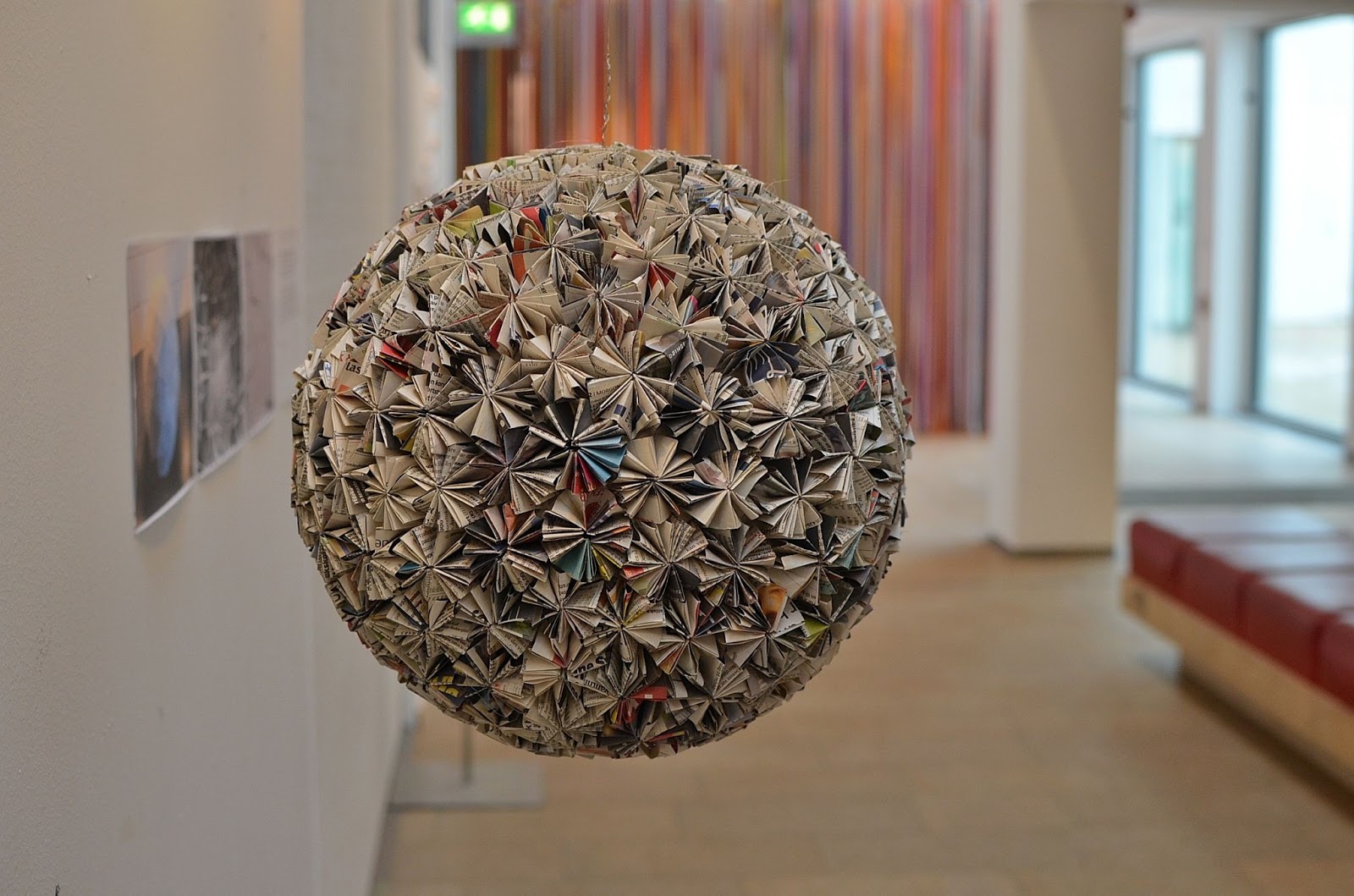
This "ball", also at Dunker's, is rather decorative. But is it art?


Wednesday, 16 January 2013

The 1897 Stockholm General Art and Industrial Exposition

A general view of the exposition area. 
(image by wikipedia)

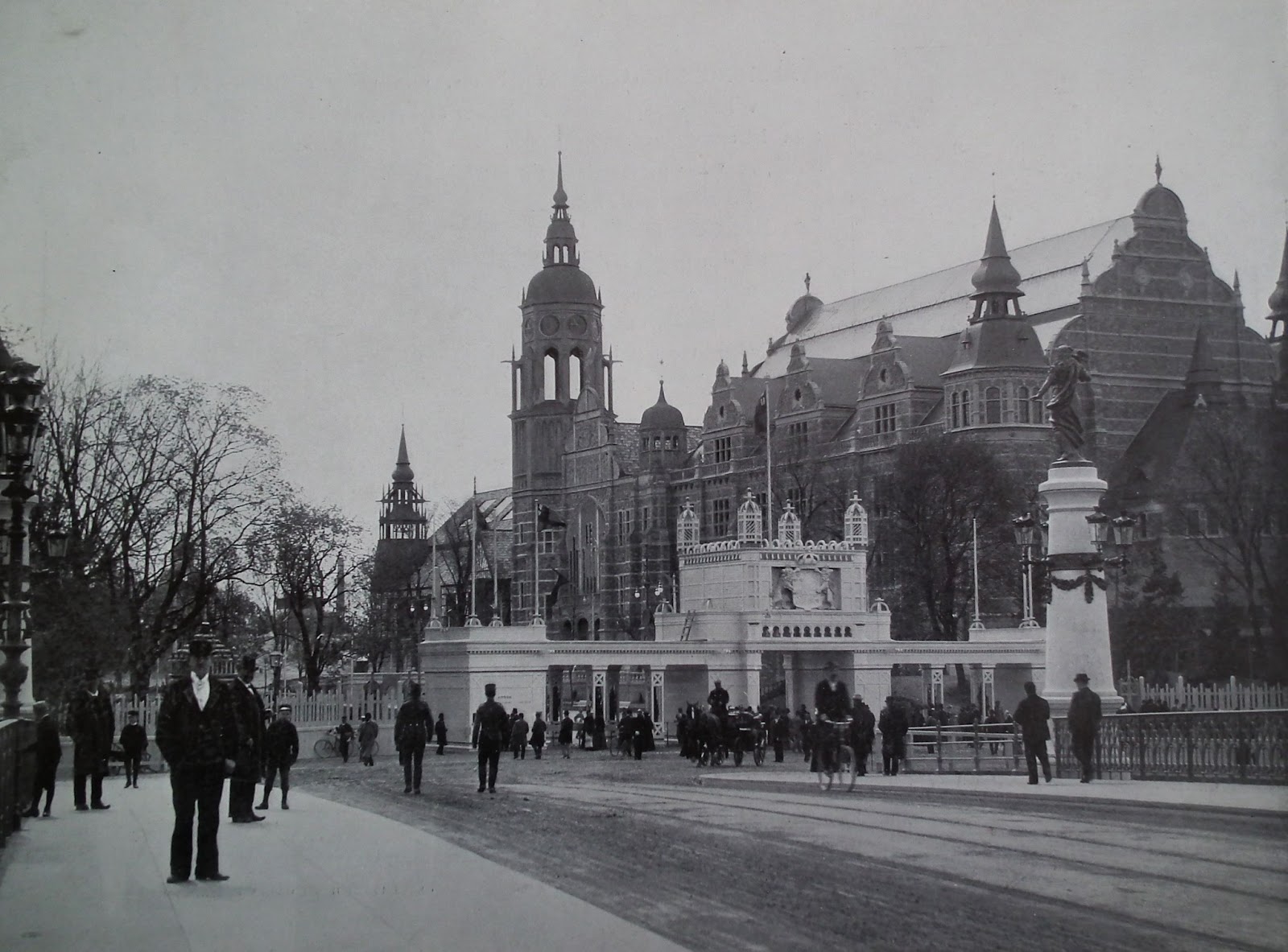
The 1897 Stockholm General Art and Industrial Exposition was a huge undertaking, and also a major international media event. When the exhibition closed on October 3, having been open since May 15, there had been a staggering 1,5 million visitors. 

The 1897 exposition was the fourth and largest in a series of Scandinavian fairs. This time also Finland and Russia took part. (In order to make the Finnish participation possible, also Russia, of which Finland at the time was an autonomous Grand Duchy, had to be invited). 

Formally the exposition was organized in order to mark the 25th anniversary of King Oscar II's regency. Altogether 3 722 exhibitors took part, displaying a multitude of objects in the 208,000 square meter exposition area in the southern part of Djurgården. Many new technical inventions, like moving pictures and the modern bicycle, were introduced at the fair. 

The main entrance, with the Nordiska Museet in the background. Only a part of this new cultural history museum had been completed at the time, but a temporary annex building was added for the exposition.
The exposition area, seen from Strandvägen. The bridge connecting Djurgården with central Stockholm was built for the exhibition. 


The Swedish-Danish "fish hall" (center, left) and "Old Stockholm" were popular among visitors. The huge candle on the right was erected by the Liljeholmen candle manufacturing company. 
The 50 meter high industry hall, with four "minarets", designed by the F. Boberg (the architect in charge of the exposition), was considered to be the grandest of all the about 100 pavilions. 
The forest exhibition hall, also designed by Boberg.
The city of Stockholm's pavilion and the main restaurant building.
The "engine hall" on the left and the pavilions of the Royal Swedish armed forces.
The white art pavilion, designed by Boberg, was considered to be the most beautiful of all the exposition buildings. The statue in front of the pavilion portrays Swedish king Carl X Gustaf. 

Part of the "Old Stockholm" area, showing how the city looked 300 years earlier. 


Thursday, 10 January 2013

J.L. Runeberg - the poet who gave Finland a moral identity

Albert Edelfelt, one of the first Finnish artists to reach international fame, illustrated The Tales of Ensign Stål. His illustrations have been admired by generations of Finns and Swedes. This drawing shows a part of the Lake Saimaa district, one of the "national landscapes" of Finland.

Finland's national poet Johan Ludvig Runeberg (1804 - 1877) is nowadays not very well known outside his own country, and perhaps Sweden (Runeberg wrote in Swedish, his mother tongue), but there was a time he was a "celebrity" in wider international circles. 

In an article, published in the National  Biography of Finland, historian Matti Klinge describes Runeberg's crucial role in the shaping of the Finnish identity: 

The poet J. L. Runeberg created an ideal of Finland's people and Nature, and he gave the country a moral identity, a justification for its existence, with his lyrics, epics and Fänrik Ståls sägner ('Tales of Ensign Stål'). Even during his lifetime, but especially after his death, he became a very important cult figure as a creator of a feeling of nationhood and the writer of the poem Vårt land (Finnish: Maamme; Our Country), which became the national anthem of Finland.

Runeberg was a notable lyric and epic poet; his creative work acquired an especial importance from the era and environment in which he was active. Along with Lönnrot, Runeberg helped to raise the newly created Grand Duchy of Finland to the status of a cultured nation in the eyes of both Finns and foreigners. In the 1830s and 1840s he created an ideal of Finland's people and Nature, and he gave the country a moral identity with his Fänrik Ståls sägner ('Tales of Ensign Stål'). Runeberg's ideological stance was influenced by the neo-humanists' admiration for Greece; politically, it adhered to the conservative line of the era of Emperor Nicholas I. Even during his lifetime, but especially after his death, he became a very important cult figure, particularly as a creator of a feeling of nationhood and the writer of the poem Vårt land (Finnish: Maamme; Our Country), which became the national anthem of Finland.
--
All of Runeberg's works were translated into Finnish, starting as far back as the 1840s. Runeberg began to become known in Russia as early as the 1830s. Many of his works were translated into German, Danish, French and English; HannaNadeschdaKung Fjalar and Fänrik Ståls sägner at the least were translated into these languages; Hanna and Nadeschda were translated into Italian; and so forth. The celebrations marking the centenary of Runeberg's birth also attracted widespread interest abroad. In Sweden, Runeberg has always been numbered amongst the most prominent writers of Swedish.          

The Tales of Ensign Stål consists of tales of the War of Finland of 1808-09 between Sweden/Finland and Russia. In the war, Sweden lost Finland, which then became a Grand Duchy in the Russian empire. 


Sven Duva on the bridge. Illustration by Albert Edelfelt.
One of my own  favorites in The Tales of Ensign Stål is Sven Duva, below in a translation by Charles Warton Stork, published in an Anthology of Swedish Lyrics in 1917:

Sven Duva

His father, once a sergeant, was poor and old and gray,
For he had fought in 'eighty-eighty, was old then, you
   might say.
And now he farmed a bit of ground his daily bread to gain
And had around him children nine, the youngest was 
Sven.

That old man Duva had himself enough of brains to share
Among a brood as large as his, one hardly could declare.
He surely gave the elder ones too much of his small wit, 
For the son that last was born was left the tiniest bit.

Sven Duva grew up just the same, was strong and broad 
   of chest,
Toiled like a slave in field or wood with unremitting zest,
Was willing, gay, and kind of heart, far more than clever
   folk,
Would turn his hand to anything, but was in all joke.

"In gracious heaven's name, poor son,what can you ever
    be?"
The old man often said to him in sad perplexity.
But when such talk would never end, Sven Duva's pa-
   tience failed,
At last he set his head to work for all that it availed.

So one fine day it chanced when sergeant Duva cooed 
   again.
The old unanswered song: "What will become of you,
    my Sven?"
The old man started backward in astonishment, because
"I'll be a soldier," said the son, and spread his uncouth
  jaws.

The aged sergeant smiled a smile full of contemptuous
   doubt:
"You rascal, take a gun and be a soldier? Oh, get out!"
"Well,"said the lad, "I make a botch of all I take in hand;
Perhaps I'll find it easier to die for king and land."

Old Duva was surprised and touched, a tear rolled down
   his face;
And Sven - he shouldered knapsack for the first recruit-
ing-place.
Full size they found him; brisk and strong; 't was all they
   asked, and he
Became forthwith a raw recruit in Duncker's company.

And now came Duva's time to drill and go through ex-
   ercise,
To watch was a wondrous sight; he drilled in curi-
   ous wise.
The corporal might shout and laugh, might laugh and
   shout his best,
The new recruit went on alike for earnest or for jest.

When all the rest were tired out, he never seemed to fret.
He tramped until the ground would quake, and marched
   till all a-sweat;
But when the order came to turn, 't was his unhappy
   lot,
To face to right or face to left, whichever he should not.

Then he was tought to "shoulder arms," and tought to
    "ground arms," too.
"Present arms,""lend bayonets," - all these they thought
    he knew;
When "Should arms!" was called, he'd "lend bayonets" maybe,
At "Ground arms!" up his gun went to his shoulder in-
   stantly.

So finally Duva's drill grew famous far and wide,
The officers and soldiers came and laughed until they 
   cried;
But still he kept on patiently, untroubled by a doubt,
And waited for a better time - 't was then the war broke
   out.

When orders were to break up camp, the questions had
   to come,
Had Duva wit enough to fight or should he stay at home.
He listened calmly to their plans, but soon proposed his
   own;
"If I can't go with all the rest, I'll have to go alone."

They left him gun and knapsack to do his own behest,
A soldier he when battle raged, a servant for the rest;
And fighting-man or serving-man, alike sedate and cool,
He never played the coward, though he sometimes played
   the fool.

One day with Sandels in retreat, the Russians on each 
   flank,
Our troops were drawing slowly back along a river bank.
Right in the army's line of march a little foot-bridge 
   spanned.
The stream, and there an outpost stood, scarce twenty
   in the band.

Merely to mend the broken road this band was sent ahead,
Which done, far off from shot or blow, they rested free
   from dread.
They happened on a farmer's home and stripped the larder bare.
And Duva passed the victuals round, for he was with 
   them there.

But on a sudden all was changed, for from the near-by
   steep
With foamy horse an adjutant came spurring leap on leap.
"Go to the bridge," he shouted, "lads, for God's sake,
   no delay!
We've word a troop of enemy would cross and 
   bar our way."

He bade the leader, "Get the bridge demolished if you can,
And if you can't, well, hold it it then, and fight to the last
   man!
The army's lost if now the foe should tak us in the rear.
Sandels will come to your support, he'll soon himself be
   here."

He galloped off. But scarce the band had gotten to the 
   bridge
Before platoons of Russians rose above the farther bridge.
They opened ranks, closed up, took aim and fired. At the
   sound
Of their first volley eight bold Finns went reeling to the
   gound.

The rest shrunk back; why tarry there when nothing 
   could be gained?
Another crash of musketry, and but five Finns remained.
The all obeyed the sergeant's call "Trail arms!" and 
   then "Retreat!"
 Only Sven Duva got it wrong and leveled bayonet.

Still worse, the order to retreat got twisted in his head,
And, far from facing right about, down to the bridge he
   sped.
He stood there firm with shoulders squared, quite calm
   and easy still,
Ready to show to all that came how well he know his
   drill.

They didn't give him long to wait, for ere he took his 
   stand,
Behold, upon the little bridge there thronged a hostile
   band.
Man after man they rushed across, but each as he came on
Got face-to-right or face-to-left, fell over, and was gone.

No human arm was strong enough to make that giant
   to yield,
And when the rear ranks tried to shoot, the front ranks
    were his shield.
The fiercer was the foe, the more his hope would come 
    to naught,
When up came Sandels, with his men and saw how 
   Duva fought.

"Bravo!" he shouted, "fine; keep on you splendid fel-
   low, you!
Throw every devil off the bridge, hold on, for God's 
    sake, do!
That's how a Finn should fight, ay, that's a soldier you
   may say.
Come on boys, hurry to his help! for he has saved the
   day!"

The enemy soon found themselves checkmated in the
   game;
The Russians, turning right about, retreated whence
   they came.
When all was quiet, Sandels left his horse and went to
   see
The soldier who stood on the bridge and fought so gal-
   lantly.

They pointed out Sven Duva then. His battle-lust was 
   gone,
For he had fought there like a man, and now the strife 
   was done.
It seemed as though in weariness he rested after play,
No longer bold and confident, but very pale he lay.

Then Sandels bent him down above that face so white
   of hue;
No unfamiliar man was that, but one whom all men 
   knew.
But Sandels saw that underneath his heart the grass was
   red.
His breast was pierced, and through the wound his life
   now had sped.

These were the words the general spake: "We'll all of 
   us admit
That bullet knew far more than we, it knew the place to
   hit;
It left unhurt the poor lad's head, which was not of the
   best,
And found itself a worthier mark, his noble, valiant
   breast."

And afterwards whenever men would tell about the fight,
They each and every one agreed that Sandel's words 
   were right.
"It's true," they used to say, "his mind did did less than
   most men's could,
A sorry head Sven Duva had, his heart, though, that was good."


(The text is published in the same way as it appeared in the anthology).

Here are a few more illustrations to the Tales of Ensign Stål by Albert Edelfelt: