Monday, 13 December 2010

An old Yiddish song


Why not start the week with this classic Yiddish song, here performed by The Budapest Klezmer Band.

Sunday, 12 December 2010

Simple pleasures nr 16: Organ recitals


No wonder that the pipe organ is called “the king of instruments”. There is no mightier sound than the sound of a big organ in a medieval cathedral (although you will find outstanding organs in tiny parish churches and concert halls, too).

And there are literally thousands of organ recitals on offer in churches all over the world. The reason that this post is in the simple pleasures department is not that playing the organ would be simple – quite the contrary, of course – but because most of the recitals, often by world class organists, are either free or with very low ticket prices. This is probably due to the fact that organ music is not part of the commercially created “star” cult dominating so much of popular and parts of classical music these days.

Take for example one of the greatest living organists, Dame Gillian Weir. She toured a number of big and small Danish and Swedish cities earlier this year. To hear one such recital is so much more rewarding than most expensively priced concerts by e.g. some opera singers, who already are past their prime.

In the UK there is a great site which helps you find interesting organ concerts. Similar sites might be available in other countries.

To put you in the right mood, listen to the German organist and conductor Karl Richter play Bach´s famous toccata and fugue in D minor.

PS
The photo shows the organ of the Santa Maria della Scala in Siena (Tuscany), built c. 1515.

Saturday, 11 December 2010

About Modern and Contemporary Art

I invite you to choose between two works of art, both of which have been sold by the famous auction firm Christie´s.

Which one do you prefer?

This one :


Andy Warhol (1928-1987)

Oxidation Painting (also known as Piss painting)

( the product of Warhol and company urinating on the copper-coated canvas)

Price Realized

$1,889,000 (!)
or the one here:

The Baptism of Christ Hendrick van Balen I (Antwerp c. 1574/5-1632) and Jan Breughel II (Antwerp 1601-1678)

Price Realized

£169,250 ($260,307)

If you, as I, prefer the second one, you might be interested in reading the late British art conoisseur Kenneth Snowman´s opinion on modern and contemporary art:

“One of the ugliest stains discolouring the fabric of our end of the twentieth century has been contributed by an alarming number of stuntmen masquerading as painters and sculptors with the connivance of a further number of near-illiterate critics and gallery directors, cynical dealers and ignorant patrons. The common factor which unites these pretentious individuals (present tense is sadly mandatory since the situation largely persists) is a total lack of respect for, or knowledge of, their more cultivated forebears.”

Why, indeed, should these people attempt to fulfill the demanding requirements of true astistic endeavour when they can so easily and profitably get away with fraudulent jumbles of brushstrokes
and meaningless heaps of rubbish left on the gallery floor to be admired by the simple-minded?

How many times, one cannot help wondering, have normally responsible action houses and galleries put on display non-figurative panels, painted by overpraised contemporary masters, the wrong way up? We know it happens, but not excactly how often. On how many occasions has one found examples of these pointless trivialities portentously labelled Untitled, as though the profound creativity of the artist were quite beyond the understanding of a mere member of the public? Of course, the possibility that the perpetrator could no be bothered to think up a title for his or her masterpiece cannot be entirely missed.”

Snowman wrote this in 1993, but not much has changed since that time. Although there are some signs of change in the air.

PS

For those prefering the number one choice, here is a suggestion for further reading.

Friday, 10 December 2010

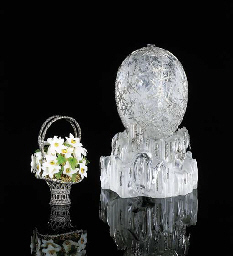
The Lady Behind the World´s Most Expensive Egg


Everybody knows the name Fabergé – the jewellery firm famous for making the jewel-encrusted easter eggs for the Russian Tsar and many other objects of superior quality and beauty for royal and other well-to-do buyers. But few people know that about 75% of the people who actually designed and made these objects were Finnish (many of them Finnish-Swedes). The most famous of them, Henrik Wigström was work headmaster for Fabergé from 1903 until the firm was nationalised by the Bolsheviks in 1918. Other famous Finnish workmasters were August Holmström and his son Albert, Anders Nevalainen, August Hollming and Hjalmar Armfelt.

Among all the great masters there was only one woman, the designer Alma Theresia Pihl, who was the daughter of the Finnish Fabergé workmaster Oskar Pihl. Among the objects the talented Pihl designed are two of the most famous Fabergé eggs; the “Mosaic Easter Egg ” (1914) now owned by Her Majesty, Queen Elizabeth II and the “Winter Egg” (1913).

In 2002 the Winter Egg was sold by Christie´s to an anonyous buyer for the not so modest sum, $9,579,500, the highest price ever paid for a Fabergé egg.

Christie´s did not fail to mention the designer in their information material for the sale:


The Winter Egg is without doubt one of the most creative and original of the Easter eggs Fabergé made for the Tsar. It symbolizes the transition from Winter to Spring, the seed emerging into new life, the Resurrection. The Spring flowers appear as if through a frosty mist inside the Winter ice of the egg, before the egg is opened to fully reveal the surprise. Only in the first Imperial Egg, the Hen Egg of 1885 (now in the Forbes Magazine Collection), has the Easter message so clearly illustrated, but does not have the degree of realism and delicacy achieved in the Winter Egg. Many of Fabergé's Imperial eggs rely on standard rococo and neo-classical motifs, albeit superbly executed in gold and enamel, for their effect, but Alma Theresia Pihl, the designer of the Winter Egg, broke away from these conventional elements to produce a magical work of original creative genius.

The Winter Egg was made in the workshop of Albert Holmström, which mainly specialized in jewelry. His father, August Holmström, had been appointed principal jeweler to the firm of Fabergé in 1857 and on his death in 1903, he was succeeded by his son. With the inspiration of the highly talented designer, Alma Theresia Pihl, whose two pièces de résistance were the Mosaic Egg, presented in 1914 (now in The Collection of Her Majesty The Queen of England) and The Winter Egg presented in 1913 and under the direction of Albert Holmström, some of Fabergé's most outstanding works were created.


If you are interested in acquiring an original Fabergé piece, the best place is certainly Wartski in London.( But you will need a heavy wallet!) The  former owner and chairman of Wartski, Kenneth Snowman was also a great Fabergé scholar, whose books are a goldmine for those more seriously interested in exploring the world of Fabergé

PS
My own interest in Fabergé dates back to January 1994, when I saw the exhibition "Fabergé: Imperial Jeweller" at the Victoria and Albert Museum in London. It was the most beautiful exhibition that I have ever seen.

Thursday, 9 December 2010

Villa Mairea - Alvar Aalto´s masterpiece in Finland


Of all the houses the renowned Finnish architect Alvar Aalto designed, Villa Mairea is my own favourite. The house, which Aalto designed for his close friends Maire and Harry Gullichsen in the late 30´s is beautifully located on a hill in Noormarkku, western Finland.

The Alvar Aalto Museum has produced an excellent online exhibition of Villa Mairea, with a wealth of great photos and drawings as well is interesting commentary.

This video presentation is also visually interesting, although the spoken commentary is in Finnish and the subtitles in Spanish.

There are several excellent books on Villa Mairea. My own favourite is the one written by Richard Weston for Phaidon. For a more comprehensive resource the best choice is probably "Inside the Villa Mairea", published by The Alvar Aalto Museum and the Mairea Foundation.

Wednesday, 8 December 2010

The World of Flamenco


A vigorous rhythmic dance style of the Andalusian Gypsies
Music or song suitable to accompany a flamenco dance
Merriam-Webster dictionary

There is no better ambassador for the Andalucian Flamenco than the film director Carlos Saura. He has made several beautiful films and documentaries featuring the art of flamenco. My own favourite, the documentary “Flamenco” (1995) includes perfomances of some of the best flamenco singers, dancers and guitarists. It is a musical and visual feast on the highest artistic level. Buy the DVD if you are interested in exploring the world of flamenco!

Here is an excerpt from “Flamenco” and here is another one:


PS
I just found out that Carlos Saura has made a sequel to “Flamenco”, which premiered in Madrid only a few weeks ago. The sequel “Flamenco Flamenco” is something to look forward to. Hopefully it will soon be available also on DVD for international audiences.

Tuesday, 7 December 2010

Oldies but goldies


When I was much younger than now, popular music was more interesting, mainly because the tunes had good melodies and the singers knew how to sing. And the variety on offer was remarkable; there were popular hits from many countries, e.g. Germany; Italy and France in addition to the US and UK.

Here is a small selection of my early favourites:

Guaglione (Claudio Villa)

Junge Komm Bald Wieder (Freddy Quinn)

Non, Je Ne Regrette Rien (Edith Piaf)

Nel Blu Dipinto Di blu (Domenico Modugno)

Guarda Che Luna (Olavi Virta)