Catastrophes, wars, terrorism, ecological disasters, deadly diseases, poverty .... The list of tragedies - both personal and public - is endless. Every day and hour media, politicians, experts - and charlatans - bring us a never ending barrage of bad things. No wonder that many people feel depressed and weary. This blog tries - in a modest and personal way - to contribute to a more balanced view. After all, there is so much to appreciate and enjoy in life ...
Tuesday, 25 September 2012
The historic Pålsjö cold bath facility in Helsingborg
The Pålsjö cold bath facility has been a Helsingborg landmark since the beginning of the 1880´s. The present y-formed construction, which includes a number of bathing huts with ridged roofs and a sauna, was built in 1909. A study made in 2008 showed that the pillars supporting the buildings are severely affected by corrosion, and the entire facility has to be rebuilt, retaining the old architectonic shape. The rebuilding work is expected to start early next year.
Monday, 24 September 2012
A peaceful bunker hideaway in southern Sweden
There are over 1000 bunkers and other types of protection in the Skåne (Scania) Line - a 500 kilometer long line of light fortifications erected during World War II around the coast of southern Sweden. During the cold war the line was further strengthened. Almost all of the fortifications are still standing, although emptied of military equipment. A number of the fortifications are now managed by the Military Preparedness Museum ("Beredskapsmuseet") and have been undergoing an extensive renovation.
This particular bunker, which I found on the shore of the Kulla-Gunnarstorp Nature Reserve, has not been renovated by the Preparedness Museum. Instead some enterprising person has converted a corner of it into a peaceful hideaway, with a nice little bench and an open grill.
And the text on the "wall decoration" is something for all of us to remember:
"Small, small words of love, said every day
will fill your home with sunshine and enjoyment"
This particular bunker, which I found on the shore of the Kulla-Gunnarstorp Nature Reserve, has not been renovated by the Preparedness Museum. Instead some enterprising person has converted a corner of it into a peaceful hideaway, with a nice little bench and an open grill.
And the text on the "wall decoration" is something for all of us to remember:
"Small, small words of love, said every day
will fill your home with sunshine and enjoyment"
Saturday, 22 September 2012
The Swedish merchant fleet during World War 1
![]() |
| Some Swedish merchant ships were marked with a flag showing the Swedish colours |
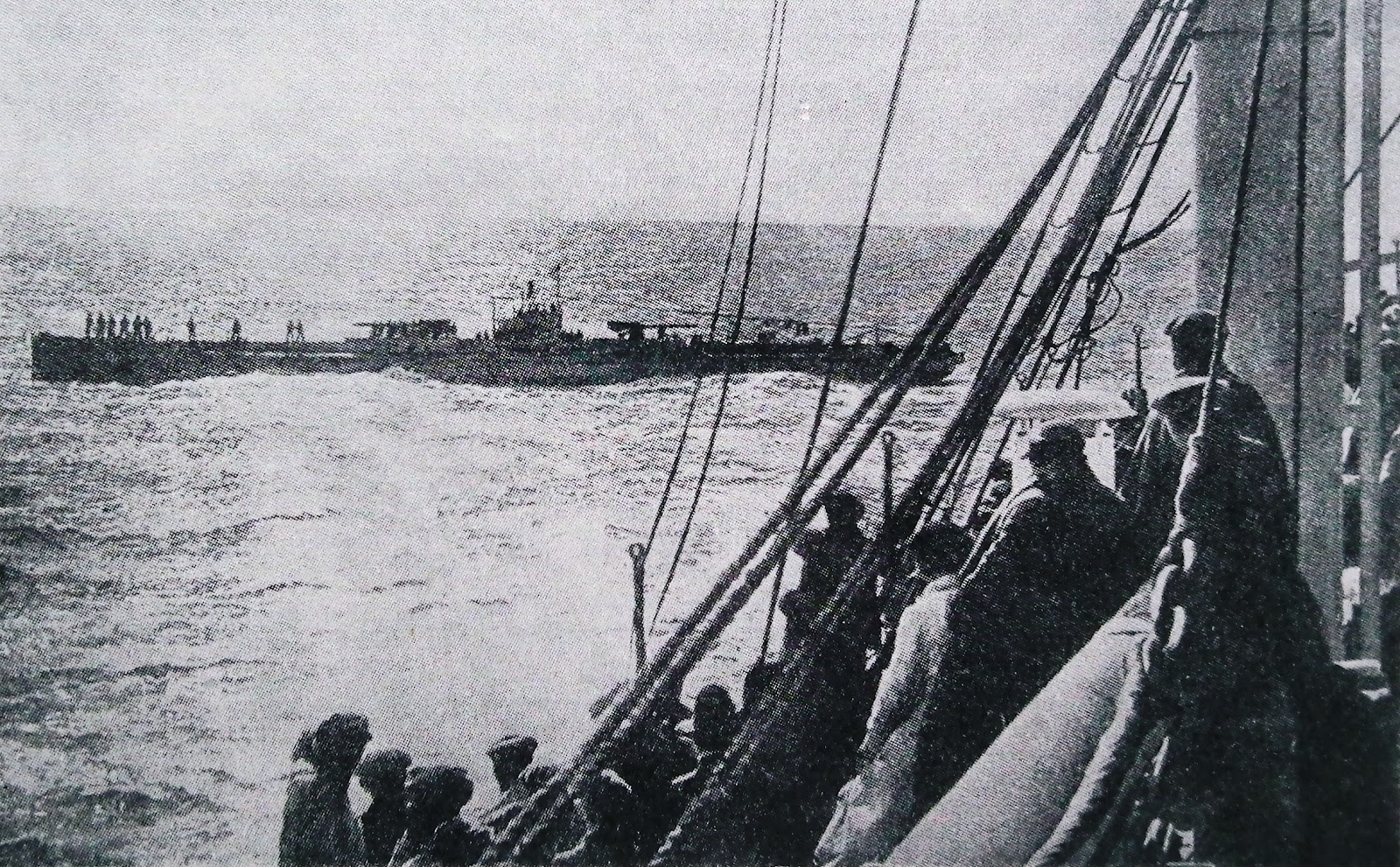
Neutral Sweden was not a participating nation in the World War 1, but still the country was in many ways affected by the war. Particularly, the Swedish merchant fleet was hit quite hard; during the war years it lost altogether 194 ships, 17% of its total tonnage.
![]() |
| 1918 map of submarine blockade zones |
| German, Danish and Swedish mine fields in Øresund (1916) |
![]() |
| A German U-boat holding up a Spanish steamer |
![]() |
| The Swedish steamer Hispania had a white and red zebra painting, indicating that it was entitled to sail through the U-boat zone when departing the UK. |
![]() |
| Workers inspecting damage caused by a mine on the Swedish steamer Thyra in April 1919 |
![]() |
| In July 1917 the Swedish steamer Vanland was hit by a torpedo |
![]() |
| In March 1916 the steamer Martha hit a mine field close to the Falsterbo reef, but could be towed to Malmö |
(Source: Article by Axel Lindblad in the book Sveriges Sjöfart, published in 1921)
Friday, 21 September 2012
Images of Copenhagen in the late 19th century
![]() |
| A photo of central Copenhagen in the early 1890s |
![]() |
| Copenhagen has always been a major port city (drawing from the 1850s) |
![]() |
| A view of the then new Copenhagen built around one of the artificial lakes which previousley were part of the city´s fortifications |
![]() |
| The Børsen building in the background served as stock exchange from 1620 to 1974 |
![]() |
| The Rosenborg castle in central Copenhagen was built in 1605 as a Royal summer residence |
![]() |
| The Royal Theatre, built in the 1770s |
Sunday, 16 September 2012
Historic battles in Øresund
Øresund has not always been the peaceful shipping lane that it is now. In earlier centuries, battles - particularly between the neighbours Denmark and Sweden - were common. The winning side often asked leading marine artists to immortalize the victories:
This painting by the 19th century Danish marine artist Anton Melbye (1818 - 1875) depicts the Battle of Køge Bay on July 1, 1677. It is recognized as Denmark´s greatest naval victory ever:
After losing control of the Baltic Sea in the Battle of Öland the year before, the Swedish navy wanted it back. The Danish fleet, commanded by Niels Juel, had 1,354 cannons and 6,700 men, while the Swedish fleet, commanded by Henrik Horn, had +1,792 cannons and 9,200 men.
![]() |
| Anton Melbye´s oil painting is part of the collections of Statens Museum for Kunst, the Danish National Gallery |
This painting by the 19th century Danish marine artist Anton Melbye (1818 - 1875) depicts the Battle of Køge Bay on July 1, 1677. It is recognized as Denmark´s greatest naval victory ever:
After losing control of the Baltic Sea in the Battle of Öland the year before, the Swedish navy wanted it back. The Danish fleet, commanded by Niels Juel, had 1,354 cannons and 6,700 men, while the Swedish fleet, commanded by Henrik Horn, had +1,792 cannons and 9,200 men.
On 1 July at daybreak, despite some of his ships having fallen behind, Juel closed, as did the Swedes, and fighting began at about 5am. Horn sent in fireships but the Danes towed them aside. As the fleets approached the coast near Stevn's Point, Juel bore away a little in the hope that the Swedes would try to stay to windward and run aground.
In the early afternoon the wind changed, as Juel had anticipated, and utilising this, the Danish fleet broke the Swedish line by crossing the T, thus isolating several major warships. This was the turning point of the battle, which soon turned into a complete rout.
The Swedes lost eight war ships, several smaller ships and about 3,000 men. The Danish fleet did not lose any ships, only damages on the ships and approximately 100 men were killed and 275 wounded.
This etching by Erik Dahlberg (1625–1702) shows the Battle of the Sound between the Swedish and Dutch fleets on October 29, 1658.
This is Dahlberg´s interpretation of the Swedish conquest of the Kronborg castle on September 7, 1658.
A mixed bag
Here are four shots from yesterday evening:
![]() |
| This is the car carrier Elbe Highway passing Helsingør at about six A.M. on its way from St. Petersburg to Zeebrügge. |
Subscribe to:
Posts (Atom)