Showing posts with label London. Show all posts

Friday, 10 February 2017

Abstract art

This is abstract art I like:


Detail of a vintage Georgina von Etzdorf tie

Thursday, 29 December 2016

The story of my vintage Georgina von Etzdorf tie

“What do ties matter, Jeeves, at a time like this?
There is no time, sir, at which ties do not matter”

― P.G. Wodehouse

When we moved to London in the autumn of 1989, I decided that I needed a couple of new ties. Soon I found two nice ones in a shop - the newly opened Georgina von Etzdorf shop - on Sloane Street in Chelsea, close to where we lived.

At the time I was not aware of the fact that Georgina already was a big name in the London fashion world. The Georgina von Etzdorf web page tells us why:

"When the Donald Campbell dress made from GvE´s ´Poppy´ for the Princess of Wales attracted world wide attention, the partners never needed to advertise."

"Journalists delight in naming celebrities who wear GvE designs"

Among the celebrities were e.g. The Rolling Stones, Janet Jackson, Robin Williams, The Pet Shop Boys and Kylie Minogue ...

Read more here.

Here are a couple of details of my first von Etzdorf tie, which still is my favourite one:


For those interested in more information:

"Etzdorf was born in 1955 in Lima, Peru, to a Prussian father and an English mother. She lived in Peru till the age of five, when her family returned to Britain. She has often claimed that her early years in Peru strongly influenced her dynamic sense of colour and texture.
Etzdorf studied textile design at Camberwell School of Art in London, graduating in 1977. At Camberwell she met Martin Simcock, who later joined her as one of the co-founders and partners of the Georgina von Etzdorf label. The third co-founder and partner was Jonathan Docherty, who studied industrial design at the Central School of Art and Design in London and who had been a school friend of Simcock's
Etzdorf spent several years as a freelance designer before she, Simcock, and Docherty founded the Georgina von Etzdorf Partnership in 1981, basing themselves originally in a garage and stable at Etzdorf’s parents’ house, where they set up a silk screen printing workshop. Their plan was originally to produce fabric for third-party fashion houses, but they took the decision to produce in-house because of their failure to find commercial printers willing to adapt their processes to the challenge of printing Etzdorf’s designs.
In 1984 the Georgina von Etzdorf fashion label made its first appearance at the autumn London Designer shows previewing accessories, scarves and ties. In 1985 the partnership produced its first full clothing collection.
In 1986 Georgina von Etzdorf opened a first London shop in Burlington Arcade. That was followed in 1988 by a second shop, off Sloane Street in Chelsea. By the mid-1990s the company was selling in 400 shops in 25 countries around the world, and had a concession in both Barney’s in New York and Selfridges in London. In addition to its signature scarves and ties, the company diversified into a wide range of men’s and women’s wear, such as dinner jackets, dressing gowns, sleepwear, shoes, gloves, belts, hats, and also household items such as kelims and cushions."
  (Wikipedia)

Thursday, 6 February 2014

When the British learned to love the "frogs": L'Entente Cordiale in practice in 1905


In April 1904 Great Britain and France signed a series of agreements, the Entente Cordiale, which marked the end of almost a thousand years of conflict between the two nations and their predecessor states.

The French naval visits to Cowes and Portsmouth in the summer of 1905 created a veritable wave of enthusiasm for everything French in Britain. Several of the big London dailies published editions in French during the visit. Over 100 000 people from all over England travelled to Portsmouth in order to see the visiting French naval ships. A Swedish weekly reported that "before the French departed, the sons of John Bull had learnt to sing La Marseillaise with the same éclat that the French seamen sung the British national anthem."

British and French navy officers listening to the Marseillaise on board the Royal Navy's
flagship Edward VII. The officer in the middle group with a wide belt is the commander of
the visiting French navy squadron, admiral Caillard.
 

French journalists enjoying a sumptuous meal on board a Royal Navy ship together
with their British hosts. Note the bottles of champagne on the table! 

The "luxury train" which brought the visiting French Navy
seamen to London.

French seamen warmly welcomed by the Londoners.
 
A London newspaper boy selling a French edition of a London daily.

French navy cadets getting to know young British ladies.

Admiral Caillard conversing with an elegant lady.

Tuesday, 30 July 2013

A Walk Down Memory Lane (3): Fishing in Hyde Park in 1975

Fishing in the Serpentine in the summer 1975.


The Serpentine in the Hyde Park was created already in 1730, but fishing was not allowed until 1942, as the New York Times London correspondent David Anderson reported on the opening day, June 16 of the same year: 

"It has taken a long time, but today the people of London finally received permission to fish the the Serpentine, the lake in Hyde Park created under the guidance of Queen Caroline, consort of George II, in 1730."

"Active campaigning for the right to fish this water began sixty years ago. Some persons say there are no fish worth bothering about in the Serpentine. Others argue that fish are plentiful, but have been there so long that they are much smarter than any fishermen."

On this page you can watch an old British Pathé film from the opening ceremony in June 1942.

I have not been to the Serpentine for some years now, but at least according to the Angling Guru, fishing can still be quite good there:

At Hyde Park, there is fishing in the Serpentine Lake, nearly a mile long. Fishing is permitted only in certain sections, but yields can be good. It holds roach, bream, carp and perch and some eels.

Tuesday, 16 April 2013

A disappointing Eugene Onegin from the Royal Opera in London

Pavol Breslik as Lensky and Simon Keenlyside as Eugene Onegin.

Broadcasts of opera performances from the Royal Opera in London are rare treats. That's why it was with great expectations I began to watch the Royal Opera's new production of Eugene Onegin, which also was RO's director Kasper Holten's directorial debut at Covent Garden

However, it did not take long before my enthusiasm turned into disappointment. Although it was a welcome surprise that the setting was quite traditional, it was clear from the very beginning that Holten's "invention" - to introduce "doppelgängers" for the main characters - was a nonstarter.

It is not difficult to agree with what the Guardian's eminent critic Andrew Clements wrote about Holten's debut:

If Eugene Onegin is a study of how an intelligent man can ruin his life by rejecting the woman who could have been his soul mate and killing his best friend in a duel, then Kasper Holten's production of it is an equally convincing demonstration of how an intelligent director can destroy one of the greatest operas in the repertoire. It's Holten's first staging as director of opera at Covent Garden, which suggests it's a work in which he feels he has something special to offer. But much of what he puts on stage undermines the carefully plotted dramaturgy; it also runs counter to what is left unsaid in Tchaikovsky's libretto, but is clear from Pushkin's poem, to which the opera is so faithful.


Here the action unfolds through the memories of the older Tatyana and Lensky, who watch their younger selves play out the tragedy. It's the double who writes Tatyana's letter, watched by Krassimira Stoyanova's Tatyana, and it's a more youthful incarnation of Onegin who kills Lensky in the duel, while Simon Keenlyside's twitchy, conflicted character watches on, wringing his hands in anguish. The result is muddled and distracting; having effectively destroyed the letter scene, which Stoyanova sings well, Holten undermines the heartbreaking climax of the final scene, too, by bringing both doubles back on stage at precisely the moment when Tatyana remembers how happy the couple could have been.
Read the entire article here

Let's hope that the next Holten staging at the Royal Opera House will be more succesful than this one! 


Saturday, 29 December 2012

Very British baby carriages in Hyde Park


Today, when I searched for something else in my photo archive, I found this image, which I must have shot in London's Hyde Park in the late 70's. I think one could say that babies were transported in style at that time .....

Friday, 6 July 2012

Pictures of London in the 1890s

A formal gathering at the Tower of London
London in the 1890s was the bustling center of both the United Kingdom and the British Empire. Towards the end of the Victorian era London was  Europe´s and the world´s greatest port and commercial center (a role it kept until the 20th century). London was also the first "world city": 

During the 19th century, London became the first "world city"; 1) it had a large population distributed over a very large geographical area; this dispersion of the population to suburbs was made possible, as we shall see, by the mechanization of transportation; the railroads were built beginning in the 1830s, the Underground was begun in 1865, and there were horse-drawn trams by the 1880s; 2) the population of a world city comes from the whole world; London attracted the dispossessed and ambitious from the British Isles; it attracted the poor and the politically oppressed from southern and eastern Europe; and it lured immigrants from British possessions throughout the world, particularly India and China; 3) a world city has direct industrial and commercial ties to the entire world.  In 1880, the Port of London received 8,000,000 tons of goods (up from 800,000 in about 1800).  A contemporary guidebook advised:  "Nothing will convey to the stranger a better idea of the vast activity and stupendous wealth of London than a visit to the warehouses, filled to overflowing with interminable stores of every kind of foreign and colonial product." (Willis, World Civilizations, p. 323); 4) a world city is involved in the internal affairs of other nations.  London was the capital of Great Britain, the capital of the British Empire, and the capital of the British Commonwealth of Nations.  In addition, its naval power made England a necessary participant in world affairs.
Like other capital cities, London was a political and administrative center, and it housed thousands of civil servants who worked for expanding bureaucracies; it also attracted ambitious political figures; it was also the financial center, the hub of the rail and road system, and a large marketplace for goods and services; industry tended to be located in the suburbs; city center housed government buildings and mercantile activities; capital cities were also cultural centers: newspaper and book publishers were there, as were theaters and operas, restaurants and pleasure gardens.
Problems facing 19th century capitals like London:  many were centuries old, and their centers were clusters of old streets, churches, and palaces; social structures and traditions were ancient; in-migration had flooded the old central districts and even some suburbs; hence urban development in the 19 century consisted both of the reconstruction of the ancient centers and rapid growth on the periphery;
19th century urban dweller faced common tensions and traumas of urban living, i.e. congestion and crime; but also new problems:  long commutes or a sense of isolation and despair.

Read the entire article here

London of the 1890s was also the setting of Sir Arthur Conan Doyle´s "The Return of Sherlock Holmes": 

The 1890s are unique for lots of reasons. Technology and culture is one of them. In this period, a lot of new technologies changed the way people lived. Bicycles were the new rage; electric lights were becoming more common; automobiles made their first appearance; the London subway system was growing; trains were faster; telegraphs made world-wide communication easier. We see evidence of a lot of these technological advancements in the Sherlock Holmes stories. Holmes and Watson ride the train all the time. Bicycles play a huge role in a number of stories. And Holmes and Watson also frequently read the newspaper, which changed a lot with the arrival of the telegraph. News was much faster and easier to get in the 1890s.

A lot of things were changing in the 1890s, which led to a lot of excitement and a lot of anxiety. This atmosphere is reflected in the Sherlock Holmes stories, particularly through the role of foreigners. (You can read more about this in the theme section on "Foreignness and the 'Other.'") The British Empire was huge, and growing, in this period. So even though a lot of the action in these stories occurs in London, these stories have a world-wide scope. A lot of the criminals Holmes deals with come from various places in the British Empire – South Africa, India, Australia, etc. London especially was an international hub in this era. Lots of people were anxious about the number of foreign people pouring into London and the crime rates of the city. Holmes, as a sort of ultimate crime-stopper, helped to combat that anxiety.


Read the entire article here

These drawings and photographs give you an idea about life in London in the 1890s:

Ships on the Thames river with the Tower in the background
Bank of England in the City of London
Westminster Abbey
Riders on Rotten Row in London´s Hyde Park
Busy traffic on London Bridge

Traffic on the Thames with St. Paul´s Cathedral in the background
The Thames Quay
The Tower of London in the 1890s


A short video showing life London in the 1890s: 


Monday, 5 September 2011

I was James Bond´s neighbour - almost

There have been many James Bonds, but for me there is only one:


This is my personal favourite Bond music:


PS

As a matter of fact, I have a tiny personal "connection" to Bond. According to Ian Fleming, Bond´s flat was on a little plain-tree´d square off of King´s Road in the Chelsea area of London. John Pearson has placed the flat at 30 Wellington Square.

In the late 80´s and early 90´s I had the privilege to live in one of the Wellington Square Regency terraces, built by Francis Edward in 1830-1832, although it was not number 30. At the time I did not know about the Bond connection. Maybe my neighbour, the German assistant military attaché was then the closest to Bond´s world - if one does not count former Chancellor of the Exchequer, Norman Lamont (Now Baron Lamont of Lerwick) who also lived in one of the houses for some time.

For all James Bond fans - and others as well - a visit to this, the most beautiful of all Chelsea squares is highly recommended!

Wellington Square 30 was the literary home of James Bond

Friday, 10 December 2010

The Lady Behind the World´s Most Expensive Egg


Everybody knows the name Fabergé – the jewellery firm famous for making the jewel-encrusted easter eggs for the Russian Tsar and many other objects of superior quality and beauty for royal and other well-to-do buyers. But few people know that about 75% of the people who actually designed and made these objects were Finnish (many of them Finnish-Swedes). The most famous of them, Henrik Wigström was work headmaster for Fabergé from 1903 until the firm was nationalised by the Bolsheviks in 1918. Other famous Finnish workmasters were August Holmström and his son Albert, Anders Nevalainen, August Hollming and Hjalmar Armfelt.

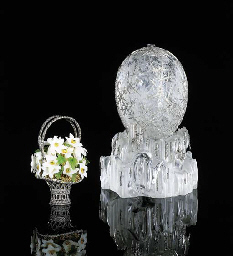
Among all the great masters there was only one woman, the designer Alma Theresia Pihl, who was the daughter of the Finnish Fabergé workmaster Oskar Pihl. Among the objects the talented Pihl designed are two of the most famous Fabergé eggs; the “Mosaic Easter Egg ” (1914) now owned by Her Majesty, Queen Elizabeth II and the “Winter Egg” (1913).

In 2002 the Winter Egg was sold by Christie´s to an anonyous buyer for the not so modest sum, $9,579,500, the highest price ever paid for a Fabergé egg.

Christie´s did not fail to mention the designer in their information material for the sale:


The Winter Egg is without doubt one of the most creative and original of the Easter eggs Fabergé made for the Tsar. It symbolizes the transition from Winter to Spring, the seed emerging into new life, the Resurrection. The Spring flowers appear as if through a frosty mist inside the Winter ice of the egg, before the egg is opened to fully reveal the surprise. Only in the first Imperial Egg, the Hen Egg of 1885 (now in the Forbes Magazine Collection), has the Easter message so clearly illustrated, but does not have the degree of realism and delicacy achieved in the Winter Egg. Many of Fabergé's Imperial eggs rely on standard rococo and neo-classical motifs, albeit superbly executed in gold and enamel, for their effect, but Alma Theresia Pihl, the designer of the Winter Egg, broke away from these conventional elements to produce a magical work of original creative genius.

The Winter Egg was made in the workshop of Albert Holmström, which mainly specialized in jewelry. His father, August Holmström, had been appointed principal jeweler to the firm of Fabergé in 1857 and on his death in 1903, he was succeeded by his son. With the inspiration of the highly talented designer, Alma Theresia Pihl, whose two pièces de résistance were the Mosaic Egg, presented in 1914 (now in The Collection of Her Majesty The Queen of England) and The Winter Egg presented in 1913 and under the direction of Albert Holmström, some of Fabergé's most outstanding works were created.


If you are interested in acquiring an original Fabergé piece, the best place is certainly Wartski in London.( But you will need a heavy wallet!) The  former owner and chairman of Wartski, Kenneth Snowman was also a great Fabergé scholar, whose books are a goldmine for those more seriously interested in exploring the world of Fabergé

PS
My own interest in Fabergé dates back to January 1994, when I saw the exhibition "Fabergé: Imperial Jeweller" at the Victoria and Albert Museum in London. It was the most beautiful exhibition that I have ever seen.

Sunday, 28 November 2010

Memories of La Tante Claire


The name Pierre Koffmann has been synonymous with the finest French
food in England for the past 35 years.

Nick Lander/FT 2007

Like a legendary rock star going back on the road for one last triumphant tour, Koffmann has returned to his roots, while playing all the big hits.
Tracey MacLeod, The Independent Magazine


Eating in Michelin star restaurants is not something I do very often. This is mostly due to the fact that these restaurants are nowadays so outrageously expensive that you have to be either affluent or in possession of a large expense account in order to frequent them.

Fortunately, it was not always so.

Back in the late 80´s and early 90´s, while living in London, I had the privilege – and it was really a privilege –  to be one of the regular customers at Pierre Koffmann´s now legendary “La Tante Claire” in Royal Hospital Road, Chelsea. Mind you, it was not cheap, but e.g. lunches were not more expensive than in many other nearby restaurants. “La Tante Claire” was probably the closest to a perfect restaurant that I will ever experience. The food was out of this world – who could forget Koffman´s stuffed pig´s trotter with morels! - the service always friendly and highly professional and the interior beuatifully decorated in Art Deco style. No wonder that “La Tante Clair” was to become one of the few British restaurants with three Michelin stars.

The great news is that Koffmann last July returned to the London restaurant scene with his new “Koffmann´s” at the Berkeley Hotel. Next time you visit London, try out “Koffmann´s” for refined country cooking à la Gascogne – I know I will. Koffmann has according to a newspaper interview moved away from “Michelin food”, which also means that the prices are more affordable. But his signature dish, 
pig’s trotter with chicken mousseline, sweetbreads and morels is back on the menu!

Here is Koffman´s "self portrait" which he once drew for me as a memory of a good meal:


PS (7.1.2011)
I just found the recipe to one of Koffmann´s finest specialities, Souffle aux pistaches.
Check it out here.

If you are interested in more of Pierre Koffman´s recipes, his book "La Tante Claire, Recipes of a Masterchef" is a treasure trove. In the book Koffmann also offers interesting glimpses into his childhood in France and his way to the Michelin top stardom. Unfortunately the books seems to be out of print, but if you are lucky, you can find used copies.

Sunday, 21 November 2010

The Wigmore Hall in London


Ask many of the world’s best singers and chamber musicians to list their favourite venues – András Schiff, Ian Bostridge, Karita Mattila – and they’ll put the Wigmore Hall at the top. Iwan Hewitt, The Daily Telegraph

For friends of chamber music and classical song the Wigmore Hall in the heart of London´s West End does not need an introduction. With its fabulous accoustics and knowledgeable audience the Wigmore hall continues to attract the world´s leading singers and instrumentalists, as it has done for decades.

While living in London in the late 80´s and early 90´s I was fortunate to be be part of the audience at many unforgettable recitals by such distinguished musicians as András Schiff, Monica Groop, Karita Mattila, Anne Sofie von Otter and many more. At that time the the Australian born William Lyne, who was instrumental in building the Wigmore Hall´s world reputation as a leading recital hall, was still the director.
Fortunately, under the new leadership the hall has been able to retain its leading role, and also to adjust well to changing musical demands.

If you like chamber music and song recitals, try to include a concert in Wigmore Hall the next time you visit London! It is advisable, though, to buy tickets well ahead, as most recitals are sold out early.

Lots of interesting information is available in Wigmore Hall´s excellent website:

http://www.wigmore-hall.org.uk/

An interesting video interview about the history of Wigmore Hall:
http://www.youtube.com/watch?v=wAcFa4WNUFA